The Chapel That Hums: A Winter Recording Day With a Cumbrian Audiobook Narrator
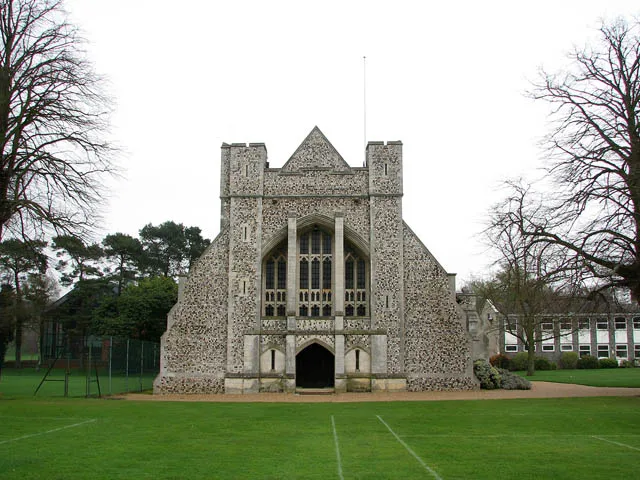
Photo: Evelyn Simak, CC BY-SA 2.0, via Wikimedia Commons
The lane up to the chapel is all wet slate and sheep wire, the kind of Cumbrian morning where the fells disappear into a grey hush and your boots make more noise than your thoughts. By the time I reach the door, the rain has settled into that fine, persistent drizzle that doesn't so much soak you as file you down. Inside, though, the building is warm and shockingly quiet. Not empty-quiet. Listening-quiet.
Mara has been recording in this converted Victorian chapel for four years now, and she still calls it 'the room' rather than 'the studio', as if it might get above itself. A single microphone stands in the middle of what was once a nave, framed by thick moving blankets and a semicircle of acoustic panels. There is a thermos of honey and lemon on a small table, a pencil sharpened to a dangerous point, and a copy of a memoir by an actor whose face you would know from a dozen Sunday-night dramas. She is 90,000 words into reading it aloud. Today is a Tuesday in November 2026, and the light outside is already thinking about giving up.
The honey-and-lemon hour
'People think it's just talking,' Mara says, unscrewing the thermos. 'It is talking. But it's also endurance, and memory, and trying not to sound like you're reading.' She pours the honey and lemon into a chipped mug, then adds a splash of hot water from a kettle that has clearly seen better decades. The ritual is precise: sip, hum, sigh, sip again. She does a few scales that sound like a door opening slowly. Then she puts on her headphones and becomes someone else.
The book is a memoir, and the actor's voice is distinctive — dry, wry, a bit battered around the edges. Mara doesn't impersonate him. That would be a mistake, she says. Instead she listens for the rhythm underneath the sentences, the places where he would pause, the jokes he would throw away. 'My job is to make the listener forget there's a woman in a chapel in Cumbria,' she says. 'They should just hear him. Or, better, they should hear a friend telling them something true.'
The director in the spare room
In her headphones, a voice crackles from Leeds. Jo, the director, is listening in from a spare room with a duvet over the desk to kill the echo. She has been on this book for three weeks and can hear a fluffed consonant from thirty miles away. 'Lovely,' Jo says, though it sounds like 'luverly' through the feed. 'Can we just take the last line again? The word 'ordinary' felt a bit careful.'
Mara nods, marks the page, and goes again. This time the word lands differently — less polished, more lived-in. There is a small pause. 'That's it,' Jo says. 'That's the one.' Mara takes another sip of honey and lemon and pulls a face at me, the kind of face that says: see? This is the glamour.
The truth is, an audiobook studio is mostly admin and breath control. Mara records in blocks of forty-five minutes, then stands up, stretches, walks a small circuit around the chapel, and comes back. She has a notebook full of reminders: 'don't rush the commas', 'let the sad bits be sad', 'remember to breathe before the chapter break'. There are pencil marks all over the script — arrows, slashes, tiny stars next to sentences that need a lighter touch. It looks like a school exercise book, not a professional recording.
Fluffed takes and the friendship test
Mid-morning, she fluffs a line. It's a small one, something about a garden in winter, but the word 'hydrangea' comes out as 'hydrangea' with an extra syllable, and she laughs. 'That's going in the bloopers,' she says. 'If anyone ever asks for bloopers.' Jo's voice comes back: 'We'll just go again from 'the garden was'.
They run it three times. On the fourth, Mara's voice drops into a lower register, almost conspiratorial, and I suddenly understand what she means about friendship. A good audiobook doesn't sound like a performance. It sounds like someone leaning across a kitchen table. It sounds like the person you sit next to on the train who tells you a story without asking for anything in return.
That, I think, is the real work. The 90,000 words are just the visible part. Underneath is the effort of making a stranger's voice feel familiar — of turning a memoir by a famous actor into something you can carry in your earphones on a dark November commute, when the windows are black and the carriage is full of people pretending not to be tired.
The chapel that listens back
By three o'clock, the light has gone completely and the chapel windows are black mirrors. Mara has recorded just over 4,000 words, which is a good day. She marks the page, takes off her headphones, and rubs her eyes. Jo signs off from Leeds with a 'lovely work, same time tomorrow'. The kettle goes on again. The honey and lemon is nearly gone.
'Some days you can hear yourself thinking,' Mara says. 'You can hear the room, you can hear the rain, you can hear the fact that you didn't sleep well. And you have to let all that go. The listener doesn't want your bad night. They want the story.' She pauses. 'But they also want to feel like someone is there. So you have to be there. Properly there.'
I leave as the rain starts again, walking back down the lane with the chapel light behind me. In my headphones, on the drive home, I listen to a few minutes of another audiobook — a thriller, all cliffhangers and sharp edges — and I catch myself thinking about Mara's voice, and Jo's voice in Leeds, and the strange, generous work of making a stranger feel like a friend. It is not glamorous. It is ninety thousand words, one fluffed take at a time. But on a dark November commute, it might be the kindest thing in the carriage.