The Last Stitch Before the Curtain: A Portsmouth Puppet Maker’s Christmas Countdown
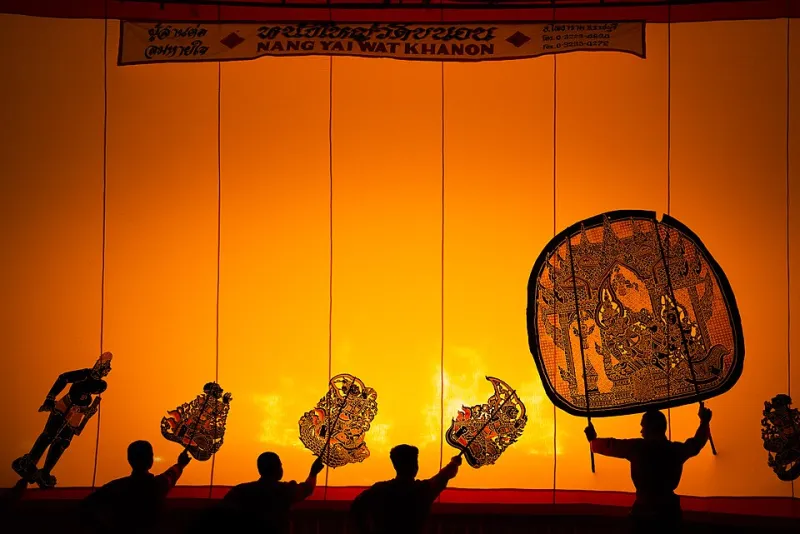
Photo: Paul-shy, CC BY-SA 4.0, via Wikimedia Commons
The first thing you notice in Mara’s Southsea studio is the smell. Glue, certainly — that sweet, slightly industrial whiff from the glue gun warming on its stand — but underneath it there’s salt air and wet wool and something faintly like orange peel. It’s a workshop that has absorbed Christmas by osmosis. Ribbons curl from drawer handles. A tiny felt boot dries on the radiator. And along the longest wall, a row of half-finished faces waits for their moment.
Mara is a puppet maker, and this November she is in the final stretch of a Christmas show that will open in Portsmouth in early December 2026. The production is a homegrown affair: a retelling of a winter folk tale, staged in a small theatre near the Guildhall, with a cast of six puppets, three puppeteers and one very patient stage manager. The puppets are all made by hand. That is the point, and also the problem.
A Workshop That Smells of Christmas and Glue
When I arrive, Mara is on her knees beside a workbench, holding a marionette by its control bar while a puppeteer called Jules walks it slowly across a sheet of newspaper. The puppet is a tall, stooped figure in a moss-green coat, with a face carved from lime wood and painted in thin, deliberate layers. It looks old. It looks like it has opinions. It is, according to Mara, not quite finished.
‘The shoulders are still wrong,’ she says, not looking up. ‘He’s supposed to be weary, not defeated. There’s a difference.’
This is the phase of a project she calls the unstitched hours: the final week or so when everything is nearly there but nothing is quite right. The costumes have been fitted, refitted and fitted again. The rods have been cut to length. The script has been marked up with puppet cues in three different colours of pencil. And yet every time Mara walks past the drying rack, she sees something else that needs attention.
‘You fall in love with them at the beginning, when they’re just an idea,’ she says. ‘Then you hate them a bit in the middle, when the glue won’t hold. Then you get to this bit, and you’re just terrified you’ll let them down.’
Final Fittings and Small Disasters
The studio is a converted back room of a terraced house, and it has the friendly clutter of a place where work and life overlap. There is a kettle on a shelf beside a box of glass eyes. A sewing machine sits under a framed poster from a past Edinburgh Fringe show. On the floor, a basket of offcuts is labelled ‘good scraps’ in marker pen.
Today’s small disaster is a hand. The youngest puppet in the cast — a round, curious creature called Pip — has a left hand that keeps slipping out of its socket during the snow scene. Mara has tried a tighter knot. She has tried a different thread. Now she is trying a tiny brass pin, which is either going to fix the problem or become a Health and Safety conversation.
‘There’s always one bit that fights you,’ she says, pinning carefully. ‘Last year it was a donkey’s ears. The year before, a witch’s chin. This year it’s Pip’s hand. You just have to keep going until it gives in.’
She is not being dramatic. Puppetry, she explains, is a craft of small tolerances. A millimetre too much tension and a head tilts oddly. A joint too stiff and a character stops breathing. The audience will never see the brass pin or the seventh attempt at a shoulder seam. They will only see whether the puppet feels alive.
The First Breath Under the Lights
Late in the afternoon, the lighting designer arrives to run a focus session. The theatre is a short walk away, but they have rigged a temporary lamp in the studio so Mara can see the puppets under something closer to stage light. The room goes dim. The glue gun clicks off. And one by one, the figures are carried into the circle of warm white light.
This is the moment I have come to see. A puppet in a workshop is a beautiful object. A puppet under a lamp, with a hand inside it, is something else entirely.
Jules picks up Pip first. The creature tilts its head. The light catches the curve of its cheek. Jules makes a small, hesitant movement — a shrug, a pause — and suddenly Pip is not a collection of felt and wood and thread. Pip is waiting for something. Pip is hopeful. Pip is, improbably, nervous.
Mara watches without saying anything. Her hands are clasped in front of her. When Pip turns towards the lamp and holds the pose, she lets out a breath she has clearly been holding since breakfast.
‘There,’ she says quietly. ‘There she is.’
Opening Night Is a Team Sport
The show will be performed by three puppeteers, none of whom will be visible to the audience. That invisibility is the bargain of the form, and Mara is careful to credit it. The puppets may be hers, but the life they have on stage belongs to the people who operate them. The final week is not just about finishing objects; it is about handing them over.
‘You have to let go,’ she says. ‘Which is hard, because you’ve been holding them for months. But they’re not really yours any more. They belong to the story.’
There is still much to do before the first preview: a collar to re-stitch, a pair of boots to paint, a run-through that will almost certainly reveal something nobody has thought of yet. There will be late nights and strong tea and probably at least one more small disaster. But the ghost light is already waiting in the wings of the theatre, and the glue gun has earned its rest.
On opening night, Mara will stand at the back of the auditorium and watch a crowd of strangers meet her characters for the first time. She will notice the brass pin, perhaps. She will see the shoulder seam that still bothers her. But she will also see Pip’s hand hold firm in the snow scene, and a child in the front row lean forward, and the whole room go quiet in that particular way that only happens when something handmade comes alive.
‘That’s the bit I want,’ she says. ‘That’s the bit you can’t glue.’