The Quietest Trailer on Set: A Day With the Tutor Who Keeps a Child Actor Grounded
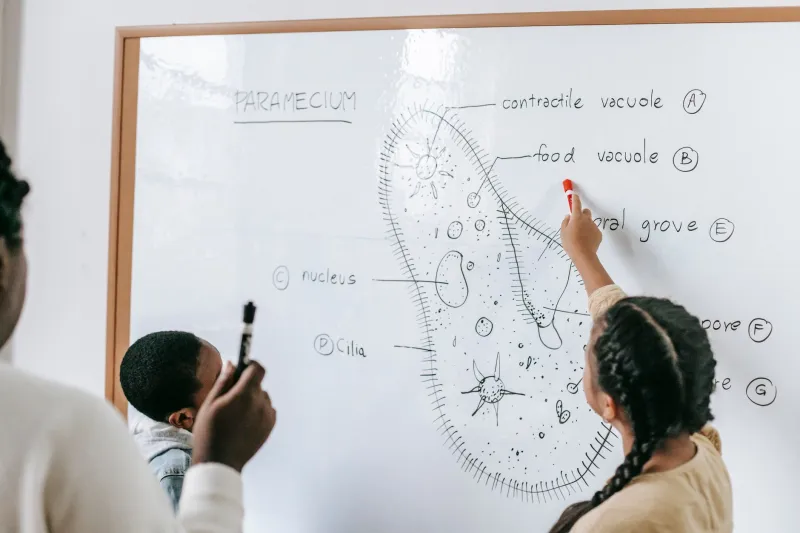
The trailer sits at the far edge of the unit base, just beyond the reach of the generators and the catering queue. It is beige, unremarkable, and has a small sign on the door that reads simply: Tutor. Inside, there is a kettle, a whiteboard, a timetable Blu-Tacked to the wall, and a ten-year-old boy called Alfie who is trying very hard to remember what a fronted adverbial is.
Outside, a film crew is setting up a shot involving a fake snow machine, a vintage bicycle and a dog that has already decided it is the star of the picture. Inside, it is warm and quiet, and the most important lesson of the day is not about grammar at all. It is about how to be a child in a room full of adults who need you to be something else for a living.
The Trailer With the Kettle On
Ruth has been an on-set tutor for eleven years. She has worked with child actors on soap operas, superhero films and, most recently, a family feature shooting on a rewilded farm in Oxfordshire. Her job, as she describes it, is not to turn children into scholars or stars. It is to make sure that when the cameras stop rolling, they still have a timetable, a routine and someone who asks whether they have drunk enough water.
'People think it is just babysitting with worksheets,' she says, pouring boiling water into two mugs. 'It is not. You are the continuity of their normal life. You are the person who remembers that they have a spelling test on Friday and that they were nervous about a scene and that they have not spoken to their best friend in three days.'
The trailer is divided into two halves. One end has a small table, two chairs and a laptop. The other has a sofa, a stack of comics and a beanbag that has seen better days. On the wall, a laminated schedule lists lesson slots in thirty-minute blocks, fitted around Alfie's scenes like pieces in a jigsaw. Some days he is in costume for six hours. Some days he is done by lunch. Ruth's job is to make both feel manageable.
Thirty Minutes of Maths Between Two Takes
Today, Alfie is needed on set at eleven for an emotional scene with his on-screen grandmother. Until then, he has a maths lesson, a reading comprehension and a fifteen-minute break that he spends explaining the plot of a video game to Ruth with the intensity of a junior showrunner.
He is bright, polite and slightly tired. He has been working on the film since September and has learned to switch between his character's received pronunciation and his own broad Buckinghamshire vowels with the ease of a light switch. When Ruth asks him to focus on fractions, he does. When she asks him how he is feeling about the scene later, he shrugs and says, 'A bit nervous. But good nervous.'
That distinction matters. Ruth has a rule: she does not coach acting. She is not there to tell him where to stand or how to cry. She is there to make sure he has eaten, that his schoolwork is keeping pace, that his parents — who are nearby but not always in the room — know what is happening, and that he has a place to sit where nobody is asking him to be a professional.
'Productions are very good at safeguarding on paper,' Ruth says. 'The licence conditions, the hours, the chaperones — it is all regulated. But the emotional side is quieter. A child can be perfectly safe and still feel like they are carrying a lot. My job is to notice that before they have to say it.'
Nerves, Notebooks and the Art of the Reset
At half past ten, Alfie's chaperone knocks on the door. It is time for a costume check. Ruth hands him a pencil case and tells him they will pick up the comprehension when he gets back. He pulls on a coat, pauses at the door and asks, 'What if I forget my line?'
'Then you will say the next one,' Ruth says. 'And the world will keep spinning.'
He laughs and disappears into the drizzle. Ruth watches him go, then opens a notebook filled with handwritten notes. There is a section for each child she has worked with: their school, their year group, their subjects, their worries, their small victories. It is not an official document. It is something closer to a memory aid, a reminder that the person in the trailer is not a production asset but a pupil who happens to have a call sheet.
She shows me a page from a previous job. A nine-year-old girl who had to cry on cue for three days in a row. 'She was fine on set,' Ruth says. 'But she would come back here and want to talk about her dog. So we talked about her dog. That was the reset. That was the lesson.'
The morning passes in small, unglamorous increments. A spelling test. A chapter of a book about a boy who can talk to trees. A conversation about whether it is okay to feel bored on a film set. (It is, apparently. Ruth says boredom is a sign of normality.) At noon, Alfie returns, flushed and pleased. He nailed the scene. He also forgot his water bottle. Ruth produces a spare one from a cupboard that seems to contain everything a small person might need: plasters, pencils, tissues, a pack of cards, a spare jumper.
The Credit Nobody Sees
By three o'clock, the light is fading and the snow machine has been packed away. Alfie finishes his last lesson of the day — a short piece of creative writing about a talking fox — and is collected by his mum. Ruth tidies the trailer, wipes the whiteboard and writes tomorrow's timetable in neat block capitals. She will not be on the red carpet. She will not be in the credits. Most people who watch the film will never know her name.
But when Alfie comes back next week for pick-ups, he will knock on the trailer door and ask if they can do the lesson on the beanbag. And Ruth will say yes. Because the quietest trailer on set is also the one where a child actor gets to be a child actor for an hour, with no cameras, no continuity errors and no one asking him to cry on cue. Just a kettle, a whiteboard and someone who remembers to ask how he is.
The film is due out in 2026. The tutor will be watching from somewhere near the back of the cinema, probably with a marking pen in her bag. She will not be looking for her name on the screen. She will be looking for the boy who forgot his water bottle and remembered his lines.