The Two-Inch Rule: An Afternoon in a Manchester Rehearsal Room Where Nobody Actually Gets Hit
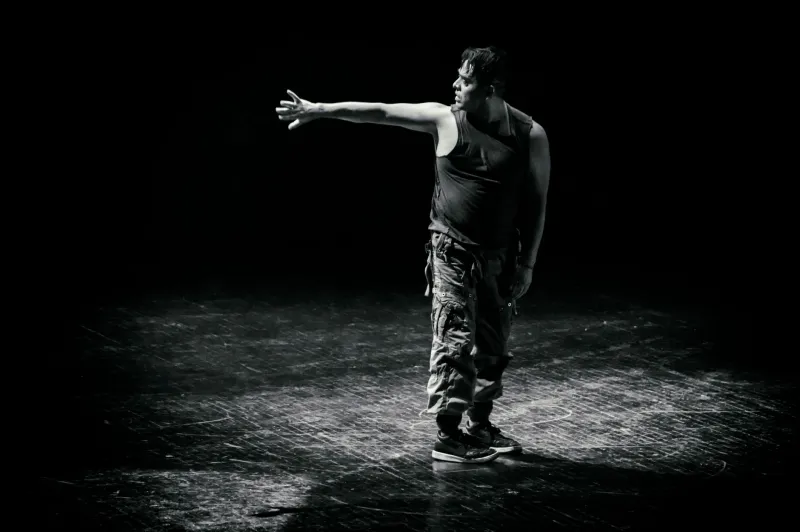
It is a damp November afternoon in 2026, and the rehearsal room above a converted Ancoats warehouse smells of coffee, floor tape and the particular dust that clings to old radiators. Six actors are circled around a scuffed table. A plastic pint glass sits on it, wobbling slightly whenever someone leans on the edge. Nobody is fighting yet. They are listening.
Nadia Clarke, fight director, is explaining the two-inch rule. “The audience does not need to see contact,” she says, holding her fist a small, deliberate distance from an actor’s jaw. “They need to see the intention, the recoil, the sound, the breath. If you give them all of that, they will fill in the rest. They are much better at it than we are.”
She has been choreographing stage violence for more than a decade, working everywhere from regional theatres to touring pubs and village halls. Today’s job is a pub-brawl scene for a new touring production — a comedy-drama with a sharp turn in the second half. The actors need to shove, swing, miss, fall and come up looking as though they have been in a proper scrap. Nobody can get hurt. Not in the rehearsal room, not on a raked stage in Leeds, not in a venue where the wing space is barely wide enough for a chair.
The bit the audience never sees
Stage fighting is not fighting. It is choreography with consequences. Every punch is a duet, every fall a small act of engineering. Nadia begins by walking the actors through the geography of the scene: where the table sits, where the chair can tip, where the door needs to slam. “You are not learning to hit,” she tells them. “You are learning to tell the truth about hitting.”
She asks two actors to stand close — closer than feels comfortable — and hold eye contact. “If you look away, the audience looks away. If you look at the place you are pretending to hit, they believe you. It is that simple, and that difficult.”
The first run-through is deliberately slow. A shove becomes a conversation. An actor steps left, lifts a shoulder, drops his weight. Nadia stops him. “You are bracing,” she says. “Bracing is what people do when they are frightened of falling. We need you to be frightened of the story, not the floor.”
Learning to fall without bracing
Falling, it turns out, is mostly about exhaling. The actors practise dropping to the floor from a kneeling position, chins tucked, hands slapping the ground a fraction before the body arrives. The slap is not for show. It spreads the impact, gives the fall a sound and stops elbows and wrists from taking the brunt. “The floor is a scene partner,” Nadia says. “Treat it with respect and it will look after you.”
One actor, a tall man with a comedian’s timing, keeps landing too heavily. Nadia crouches beside him. “You are trying to be graceful,” she says, smiling. “Stop it. Be heavy. Heavy is believable.” He tries again. This time the fall has a comic thud and a real sense of weight. The room applauds.
The pub-brawl scene comes together in beats. A shove against the table. A missed haymaker that sends one actor spinning. A chair tipped on its side. A pint glass knocked over — plastic, always plastic on tour — and a scramble for the door. Nadia marks each moment with a number, then strings them together like a dance routine. “Fight call before every show,” she says. “Every venue. Every night. Even if we have done it a hundred times. Especially then.”
Trust is the real special effect
What strikes me most is how much of the afternoon is spent talking. The actors discuss where they will look, how loudly they will breathe, what happens if someone’s shoe catches on the tape. Nadia checks rings and watches for fatigue. She asks one actor if his knee is bothering him. He shrugs. She makes him show her the movement anyway.
“The audience buys the danger, not the damage,” she says. “If they think someone is genuinely at risk, they stop enjoying it. Our job is to make it thrilling and safe at the same time. That is the invisible bit. That is the craft.”
By late afternoon, the scene has a rhythm. The punches land in the air with a satisfying snap. The falls look ugly in the right way. The actors are grinning, flushed with the particular joy of doing something difficult together. Nadia watches from the side, arms folded, calling out small adjustments. “Let the breath go earlier.” “Wait for the sound.” “Trust him. He is not going to hit you.”
And that, really, is the whole thing. A fight scene is a promise between performers. The audience will never see the two-inch gap, the rehearsed exhale, the fight call before curtain. They will only feel the shove, the swing, the fall. If Nadia has done her job, they will lean forward and say, “That looked like it hurt.” She will take that as a compliment.